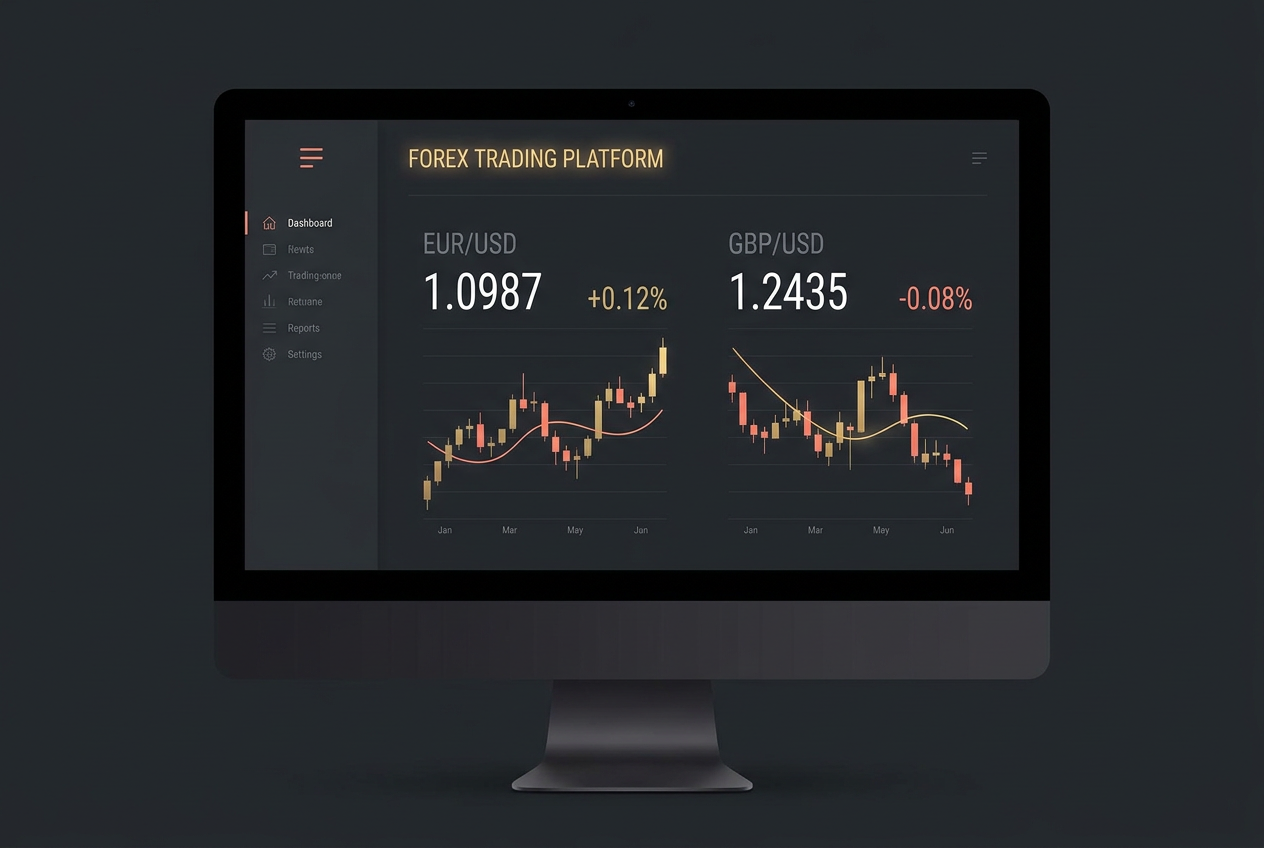
The foreign exchange market trades over $7 trillion daily, making it the largest financial market in the world. It attracts traders of all levels — but the harsh reality is that most beginners lose money in their first year. Here's why, and how you can avoid the same fate.
Mistake #1: Overleveraging
Leverage is a double-edged sword. Many beginners are attracted to forex because brokers offer leverage ratios of 50:1, 100:1, or even higher. While leverage amplifies gains, it equally amplifies losses. A 2% move against a highly leveraged position can wipe out your entire account. Start with low leverage — no more than 5:1 or 10:1 as a beginner.
Mistake #2: No Trading Plan
Successful traders don't wing it. They have a clear trading plan that defines entry and exit criteria, position sizing, risk per trade, and daily/weekly targets. Without a plan, you're gambling — not trading. Write your plan down before you open a single position.
Mistake #3: Ignoring Risk Management
Risk management is the single most important skill in forex trading. Never risk more than 1-2% of your account on a single trade. Always use stop-loss orders. Calculate your risk-to-reward ratio before entering a trade. If the math doesn't work, skip the trade.
Mistake #4: Chasing the Market
FOMO (Fear of Missing Out) is a trader's worst enemy. When you see a currency pair making a big move, the temptation to jump in is overwhelming. But by the time you enter, the move is often over. Successful traders wait for setups that align with their strategy, not emotional impulses.
Mistake #5: Not Understanding Fundamentals
Technical analysis is important, but ignoring macroeconomic fundamentals is a critical error. Interest rate decisions, employment data, inflation reports, and geopolitical events all drive currency movements. A well-rounded trader considers both technical and fundamental factors.
How to Succeed
Start with a demo account and trade for at least three months before risking real money. Keep a trading journal to track every trade — what worked, what didn't, and what you learned. Treat trading as a skill that requires thousands of hours to master, not a get-rich-quick scheme.
Final Thoughts
Forex trading offers genuine opportunities for those willing to put in the work. But it demands discipline, continuous education, and emotional control. The traders who succeed are the ones who treat their losses as tuition fees and never stop learning.